How ER Medicine Experiences Inspired “There Is A Bomb In My Vagina”
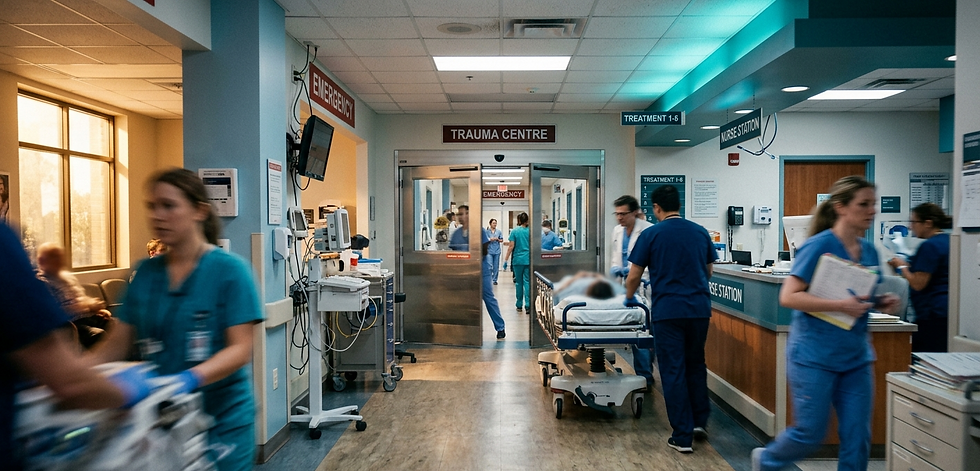
If you have ever wondered what really happens behind the swinging doors of an emergency room, the truth is both more chaotic and more human than most people imagine. Emergency medicine is not just about saving lives; it is also about navigating unpredictability, emotional intensity and moments so strange that they almost feel unreal.
That is exactly the world explored in There Is A Bomb In My Vagina, the unforgettable book by Craig Troop, M.D. Built from decades of firsthand clinical practice, the book captures real ER medicine experiences that range from humorous to shocking to deeply emotional. Every story is grounded in truth, shaped by real patients and remembered through the lens of a physician who spent 45 years inside emergency rooms and operating theaters.
In this blog, we will explore how those ER medicine experiences inspired the book, why they matter to readers and how they reveal the hidden reality of life in emergency care. Along the way, we will also understand why a single medical story can carry both laughter and gravity in the same breath.
The Reality Behind ER Medicine Experiences
To understand the inspiration behind There Is A Bomb In My Vagina, we first need to understand what emergency medicine actually feels like from the inside.
Unlike most medical specialties, emergency medicine does not follow a predictable schedule. There are no routine appointments or controlled environments. Instead, everything arrives unexpectedly: patients, injuries, emotions and crises.
As a result, ER medicine experiences often feel like stepping into a story that is already in motion.
One moment, a physician may be treating a minor injury. The next moment, a life-threatening trauma arrives through the doors. Then, without warning, a completely bizarre situation unfolds that challenges everything the medical staff thought they would see that day.
Because of this unpredictability, emergency rooms become places where reality constantly surprises even the most experienced doctors.
That is where the inspiration for the book begins.
How Real Medical Chaos Becomes Storytelling
Every physician collects stories over time. However, emergency physicians collect them faster than most.
In the case of Dr. Craig Troop, those experiences accumulated over decades of practice in emergency medicine and anesthesiology. He worked in Emergency Medicine from 1979 to 1990, then transitioned to anesthesia practice in North Texas, where he continued until 2025.
Over 45 years, he witnessed countless ER medicine experiences that were:
intense,
unexpected,
emotional,
and sometimes darkly humorous.
Eventually, something interesting happens in a long medical career: certain moments stay with you forever.
They are not necessarily the most medically complex cases. Instead, they are the moments that are emotionally, visually or humorously unforgettable.
Those are the stories that form the backbone of There Is A Bomb In My Vagina.
Each chapter in the book represents a real medical story drawn from actual events. However, instead of presenting medicine in a clinical or textbook style, Dr. Troop transforms these experiences into engaging narratives that place the reader directly inside the ER environment.
Why ER Medicine Experiences Feel So Unbelievable
One of the most fascinating aspects of emergency medicine is how often real life sounds fictional.
Many ER medicine experiences seem exaggerated when retold outside the hospital. Yet for medical professionals, they are simply part of the job.
Why does this happen?
There are a few reasons:
First, the emergency room attracts every type of human situation imaginable. Medical staff encounter people at their most vulnerable, most confused and sometimes most unpredictable.
Second, stress amplifies unusual behavior. Under pressure, people act in ways they normally would not.
Finally, medicine itself is full of rare and unexpected conditions that most people never hear about until they occur.
Because of these factors, emergency physicians like Dr. Craig Troop accumulate stories that sound unbelievable to outsiders but are completely real.
This is exactly what makes the book so compelling. It does not rely on fiction. Instead, it reveals reality as it actually happened.
The Story Behind the Title
The title There Is A Bomb In My Vagina is designed to immediately capture attention. It sounds shocking, humorous and almost impossible to believe.
However, like many memorable ER medicine experiences, it reflects the unexpected and bizarre statements that physicians occasionally hear in clinical settings.
Emergency rooms are filled with moments when patients describe symptoms, fears or misunderstandings that are both medically important and unintentionally humorous.
Rather than being used solely for shock value, the title represents a larger truth: in emergency medicine, reality often defies expectations.
And importantly, it invites readers into a deeper understanding of what really happens in healthcare settings.
Turning Medical Experience Into Human Storytelling
What separates a simple medical report from a powerful narrative is perspective.
Dr. Craig Troop does not just record events; he interprets them. As a result, each medical story in the book becomes more than a clinical observation. It becomes a human experience.
This storytelling approach allows readers to:
understand what physicians think during emergencies,
feel the tension of unpredictable situations,
and experience both humor and seriousness in real time.
Moreover, the conversational tone makes complex medical environments accessible to everyday readers.
You do not need a medical background to understand the stories. Instead, you only need curiosity.
That accessibility is a key reason why the book resonates with both healthcare professionals and general audiences.
Humor Inside Emergency Medicine
It may surprise many readers to learn that humor plays a major role in emergency medicine.
In high-pressure environments, humor becomes a coping mechanism. It helps medical staff process stress, maintain emotional balance and survive difficult shifts.
However, this humor is rarely forced. Instead, it emerges naturally from the unpredictability of ER medicine experiences.
For example:
unexpected patient explanations,
bizarre injury causes,
and unusual misunderstandings between medical staff and patients.
These moments, while serious in context, often carry a layer of absurdity that only becomes visible after the immediate crisis passes.
In There Is A Bomb In My Vagina, this balance between humor and seriousness is carefully preserved. Readers experience laughter, but also gain respect for the emotional resilience required in emergency care.
The Emotional Weight Behind the Stories
Although many ER medicine experiences are humorous, others are deeply emotional.
Emergency physicians frequently deal with:
life-threatening trauma,
sudden loss,
chronic illness flare-ups,
and critical decision-making under pressure.
These experiences leave lasting impressions.
As a result, There Is A Bomb In My Vagina does not rely solely on humor. Instead, it reflects the full emotional spectrum of emergency medicine.
Some stories may make readers laugh. Others may make them pause and reflect. This emotional contrast is intentional because it mirrors real medical practice.
In medicine, joy and tragedy often exist side by side.
Why Readers Connect With Medical Stories
There is a reason medical storytelling remains one of the most popular nonfiction genres.
People are naturally curious about what happens inside hospitals. However, more importantly, they are curious about human resilience.
A well-told medical story offers:
insight into life-and-death decision-making,
emotional connection to strangers’ experiences,
and appreciation for healthcare professionals.
Readers of There Is A Bomb In My Vagina often find themselves drawn not just to the events themselves, but to the humanity behind them.
That is where the book becomes powerful; it transforms clinical experiences into shared human understanding.
The Role of Experience in Medical Storytelling
One of the strongest elements of Dr. Craig Troop’s writing is authenticity.
With over four decades of clinical experience, his perspective is grounded in real-world practice rather than theoretical knowledge. That depth allows him to describe ER medicine experiences with accuracy, detail and emotional clarity.
Unlike fictional medical dramas, these stories do not exaggerate for effect. Instead, they reflect what actually happened in real clinical environments.
That authenticity builds trust with readers.
It also reinforces the idea that medicine is not just science; it is lived experience.
Why ER Medicine Experiences Matter Beyond the Hospital
While these stories originate in emergency rooms, their meaning extends far beyond medicine.
They teach readers about:
unpredictability in life,
resilience under pressure,
the importance of communication,
and the shared vulnerability of human beings.
In many ways, ER medicine experiences reflect life itself.
People face unexpected challenges. They respond emotionally. They adapt, survive and continue forward.
That universal connection is why medical storytelling resonates so deeply with readers from all backgrounds.
A Book That Blends Humor, Reality and Humanity
Ultimately, There Is A Bomb In My Vagina is more than a collection of medical cases. It is a reflection of a lifelong career spent observing the extremes of human experience.
Through the lens of Craig Troop M.D., readers gain access to real ER medicine experiences that are funny, shocking, emotional and unforgettable.
Each chapter stands as a reminder that medicine is not just about treating illness. It is about understanding people in their most vulnerable moments.
And in doing so, it reveals something universal: every medical story is also a human story.
Final Thoughts
The inspiration behind There Is A Bomb In My Vagina comes directly from decades of lived experience inside emergency rooms and operating theaters. These ER medicine experiences shaped not only a medical career but also a unique storytelling voice that blends humor, realism and emotional depth.
For readers seeking something beyond typical medical narratives, this book offers a rare opportunity to step inside the world of emergency care where every moment carries uncertainty, every case tells a story and every shift brings something unexpected.
In the end, it reminds us that even in the most chaotic environments, humanity always remains at the center of medicine.
Comments