How a European Political Observer Deciphers China’s Global Ambitions

China’s transformation from a regional power to a global powerhouse has fascinated policymakers, academics and journalists worldwide. Yet the narrative surrounding its rise is often fragmented, shaped by either alarmist predictions or overly optimistic forecasts. To see the full picture, we must view China’s trajectory with a balanced and informed perspective.
As a European political observer, I have spent years analyzing the forces that shape global power. Unlike politicians, who often work within short-term cycles or business leaders focused on immediate profits, a political observer can step back and assess broader, long-term trends. When viewed from this wider lens, China’s rise is neither accidental nor purely organic. It is the result of deliberate choices, strategic patience and global opportunities that Beijing has skillfully exploited.
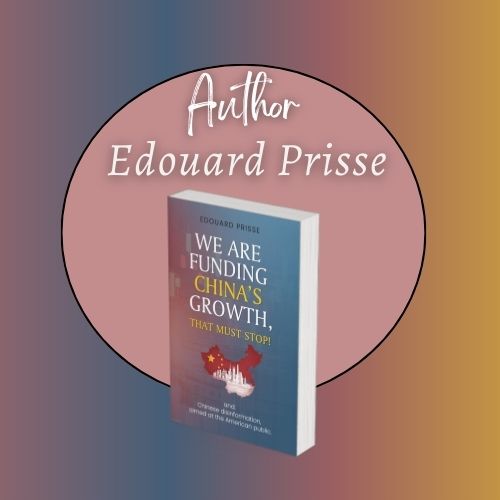
In this blog, I will share insights into China’s ambitions, how they are perceived from Europe, and why understanding them is critical for the West’s future. These reflections also echo the themes I explore in my book, We Are Funding China’s Growth, where I examine how Western choices have accelerated Beijing’s ascent.
A Political Observer’s Advantage: Seeing the Bigger Picture
One of the main benefits of being a political observer is the ability to rise above the day-to-day noise of politics and media. Where governments react to crises and corporations respond to quarterly earnings, observers can trace patterns that unfold over decades. This is especially important when studying China, whose leadership has always prioritized long-term planning over short-term gains.
As a European political observer, I see how this perspective differs sharply from the mindset of many Western institutions. In Europe and the United States, political debates are often tied to elections, public opinion polls or the news cycle. China, by contrast, plays a much longer game. Its five-year plans and its decades-long Belt and Road Initiative (BRI) show a commitment to a strategy that stretches beyond any single leader’s tenure.
This contrast explains why so many Western analysts have underestimated Beijing’s rise. They assumed China would follow the same trajectory as other nations liberalizing its economy, democratizing its politics and converging with Western norms. Instead, China followed its own path, blending state control with global integration. This divergence is what a careful political observer must highlight: the rules we assumed were universal are, in fact, not.
Europe’s Lens: How a European Political Observer Views China
Viewing China from Europe offers unique insights. Unlike the United States, which sees China primarily as a rival superpower, Europe has a more complicated relationship. On the one hand, European economies benefit from trade with China; on the other hand, they are increasingly alarmed by Beijing’s assertiveness and influence campaigns.
As a European political observer, I notice how Europe’s historical experiences shape its view of China. The continent has a long tradition of balancing powers, negotiating between empires and seeking cooperation even with rivals. This diplomatic culture makes Europe more open to dialogue with China, but also more vulnerable to Beijing’s strategies. For example, Chinese investments in European ports, energy infrastructure and technology companies have sparked both excitement and concern.
From Europe’s vantage point, China’s ambitions are not just about competition with the United States. They aim to reshape the global order in ways that could marginalize Europe’s influence. This is why European citizens, policymakers and businesses need to understand China’s ambitions not only as distant geopolitical maneuvers but as realities that impact daily life, jobs, industries and security.
China’s Economic Ambitions: Growth Beyond Borders
No discussion of China’s rise can ignore its economic power. Over the past four decades, China has emerged as the world’s manufacturing hub, lifting hundreds of millions out of poverty while solidifying its position as a global trading giant. But Beijing’s ambitions go beyond economic growth at home. They aim for economic dominance abroad.
From my vantage point as a political observer, I observe how China utilizes economic tools to achieve its political objectives. Through trade agreements, infrastructure projects and investments, China has gained influence across Asia, Africa and Europe. The Belt and Road Initiative is perhaps the clearest example of this strategy. By financing railways, ports, and power plants, China expands not only its markets for companies but also its political leverage over participating countries.
For Europe, this raises tough questions. Should European nations embrace Chinese investments for short-term growth or should they resist them to protect long-term sovereignty? A European political observer would argue that while these deals often appear attractive, they come with hidden costs, including debt dependencies, loss of control over strategic assets and a growing reliance on Beijing.
Strategic Patience: The Hallmark of China’s Global Plan
One feature of China’s rise that stands out to any political observer is its patience. Unlike Western governments, which are often pressured to deliver quick results, Beijing is willing to wait decades to achieve its goals. This patience allows it to outmaneuver rivals who are focused on short-term gains.
Take, for example, China’s approach to technology. For years, it accepted being seen as a “low-cost producer.” But quietly, it invested billions in research, education and innovation. Today, Chinese companies lead in areas such as 5G networks, electric vehicles and renewable energy. This transformation did not happen overnight; it was the result of consistent, long-term planning.
As a European political observer, I find this lesson critical. Western nations must understand that China’s ambitions are not reactive but proactive. Beijing is not just responding to global trends; it is shaping them. Recognizing this difference is essential if the West hopes to respond effectively.
Soft Power and Narrative Control: China’s Global Storytelling
Economic and military power are only part of the picture. China also seeks to shape the world's perception of itself. Through media partnerships, cultural exchanges and educational programs, Beijing invests heavily in projecting a positive image. At the same time, it uses censorship and influence campaigns to suppress criticism and control narratives.
As a political observer, I view this as one of China’s most subtle yet powerful strategies. It is not only about building railways or exporting goods, it is about exporting stories, ideas and values. For example, China presents itself as a champion of globalization and development, even while practicing protectionism at home. It portrays the West as declining and divided, while painting itself as stable and forward-looking.
For Europe, these narratives can be persuasive, especially in times of economic uncertainty. But as a European political observer, I believe it is crucial to look beyond the surface. Soft power is never neutral; it serves strategic purposes. Understanding China’s storytelling is as important as analyzing its military or economic policies.
What the West Overlooked: Lessons for the Future
Looking back, one cannot help but wonder: how did the West misjudge the situation so badly? Why did leaders believe that engaging China would inevitably lead to convergence with Western values? The answer, in part, lies in overconfidence. The West assumed its model was universal. It underestimated China’s ability to adapt to globalization to its own advantage.
As a political observer, I see this as a reminder of the dangers of wishful thinking in international politics. Policies must be based on reality, not assumptions. The enrichment of China was not an accident; it was the direct result of choices made by Western governments, businesses and institutions. Recognizing this truth is uncomfortable but necessary.
For Europe, the lesson is even sharper. The continent cannot afford to be passive. It must decide whether to continue being shaped by China’s ambitions or to assert its own vision for the future. From the perspective of a European political observer, the window for such decisions is narrowing.
Charting a New Path: A Political Observer’s Call to Action
The rise of China presents both challenges and opportunities. The West can choose to engage with Beijing in ways that protect its interests while still benefiting from cooperation. This requires not blind optimism, but strategic clarity.
As a European political observer, I call for a balanced approach. Europe must strengthen its alliances, diversify its economic dependencies and invest in its own industries. It must also develop a more sophisticated understanding of China, not just as a market or rival, but as a strategic actor with ambitions that extend far into the future.
The ultimate goal should not be to isolate China, but to engage it on terms that are fair, reciprocal and sustainable. Only then can Europe and the wider West safeguard their sovereignty while coexisting with a rising superpower.
Conclusion
China’s global ambitions are vast, deliberate and transformative. They affect not only the balance of power between nations but also the daily lives of people worldwide. From trade and technology to culture and politics, Beijing’s influence is everywhere.
By stepping into the role of a political observer, I have sought to connect the dots that others often miss. From my position as a European political observer, I emphasize that China's enrichment is not just a story of its success; it is also a story of Western missteps and misplaced confidence.
My book, We Are Funding China’s Growth, explores these issues in depth. It sheds light on the decisions, illusions and errors that made China’s rise possible, and it calls for urgent reflection before the balance of power shifts irreversibly. Understanding China’s ambitions is the first step toward shaping a future where the West remains not just relevant, but strong.
Comments