Health And Safety Consultancy Tips for Safer Workplaces
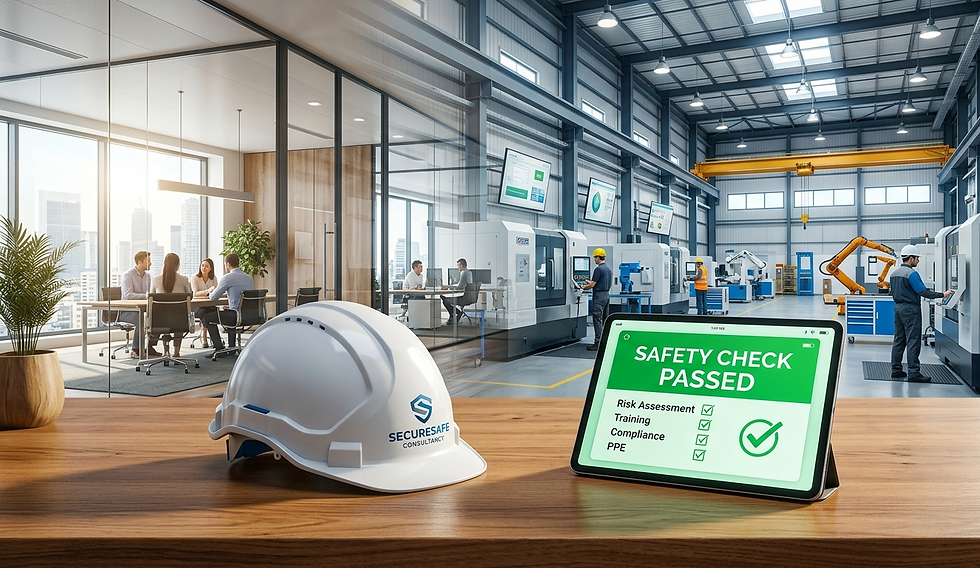
Creating a safer workplace is no longer just a regulatory requirement it has become a strategic advantage for modern organizations. Businesses that invest in structured safety systems not only reduce risk but also enhance productivity, morale, and long-term sustainability. This is where Health and Safety Consultancy plays a pivotal role, offering expert guidance to transform ordinary workplaces into well-regulated, hazard-aware environments.
Whether you are managing a corporate office, a construction site, or a manufacturing facility, the right safety framework can make a measurable difference. Let’s explore practical and insightful tips that elevate workplace safety standards.
Understand the Core of Risk Before Managing It
Every workplace carries its own unique set of risks. Some are visible, while others are subtle and often overlooked until an incident occurs. A robust Health and Safety Consultancy approach begins with identifying these risks at their root level.
Instead of reacting to accidents, proactive risk mapping helps organizations anticipate issues before they escalate. This includes evaluating physical hazards, ergonomic strain, chemical exposure, and even psychological stressors.
A refined risk profile allows decision-makers to allocate resources intelligently and prioritize high-impact safety interventions. Precision in this stage is non-negotiable.
Build a Culture, Not Just a Compliance Checklist
Safety should never feel like a bureaucratic obligation. It should feel embedded in the organizational DNA.
One of the most effective strategies recommended by Health and Safety Consultancy experts is cultivating a safety-first culture. This involves training employees to recognize hazards instinctively and encouraging open communication about near-misses without fear of blame.
When employees feel psychologically safe, they report risks earlier, reducing the probability of serious incidents. Small behavioral shifts like reporting a loose cable or an overloaded shelf can prevent major disruptions.
In regions such as Health and Safety Cambridge, many organizations have successfully implemented cultural safety models that emphasize shared responsibility rather than top-down enforcement.
Leverage Data-Driven Safety Strategies
Modern safety management is increasingly analytical. Gut feeling is no longer enough.
Advanced Health And Safety Consultancy services now incorporate data analytics to track incident patterns, identify recurring hazards, and predict future risks. This predictive approach allows businesses to transition from reactive firefighting to strategic prevention.
For example, if data reveals repeated slips in a particular zone of a facility, targeted interventions such as flooring upgrades or signage improvements can be implemented.
In competitive business environments like Health and Safety Cambridge, data-led decision-making has become a cornerstone of effective safety management systems.
Prioritize Continuous Training and Skill Reinforcement
Training is not a one-time event it is a continuous process of reinforcement and refinement.
Employees often forget procedures if they are not regularly practiced. That’s why Health and Safety Consultancy professionals emphasize micro-training sessions, scenario-based drills, and periodic refreshers.
Interactive training methods such as simulations or real-world case studies enhance retention significantly. Instead of passive learning, employees engage actively with safety protocols.
This approach ensures that when an emergency arises, responses are instinctive rather than hesitant.
Integrate Technology into Safety Systems
Technology has redefined how workplace safety is managed. From wearable safety devices to AI-powered monitoring systems, innovation is reshaping risk control.
Modern Health And Safety Consultancy frameworks often include digital tools that monitor environmental conditions, track employee movement in hazardous zones, and send real-time alerts.
Smart systems can detect overheating equipment, gas leaks, or unauthorized access before human senses can. This level of automation reduces response time dramatically.
In forward-thinking regions like Health and Safety Cambridge, technology integration is no longer optional it is becoming the industry standard.
Focus on Ergonomics and Human-Centric Design
Workplace injuries are not always dramatic; many develop gradually through poor posture, repetitive strain, or inadequate workstation design.
A sophisticated Health and Safety Consultancy approach evaluates ergonomics as a core pillar of safety. Adjustable desks, supportive seating, proper lighting, and optimized screen positioning all contribute to long-term employee wellbeing.
Human-centric design reduces fatigue and enhances productivity. When employees are physically comfortable, cognitive performance improves naturally.
Ignoring ergonomics is often a silent cost that organizations pay over time.
Strengthen Emergency Preparedness Systems
Even the most well-managed workplaces are not immune to emergencies. Preparedness is what differentiates controlled incidents from catastrophic ones.
A strong Health and Safety Consultancy framework includes detailed emergency response plans, evacuation drills, and clearly defined roles during crises.
Employees should not only know what to do but also practice it regularly. Panic is minimized when procedures are familiar.
Organizations in Health and Safety Cambridge often conduct structured emergency simulations that replicate real-world scenarios to ensure readiness under pressure.
Conduct Regular Audits and Continuous Improvement Cycles
Safety is never a finished project. It is a continuous cycle of assessment, correction, and enhancement.
Routine audits conducted under Health and Safety Consultancy guidelines help identify compliance gaps and emerging risks. These audits should be both internal and external to ensure objectivity.
Feedback loops are equally important. Employees on the ground often notice inefficiencies that formal systems miss.
In mature safety ecosystems like those seen in Health and Safety Cambridge, continuous improvement is embedded into organizational rhythm rather than treated as an occasional task.
Final Thoughts
Workplace safety is not a static achievement it is an evolving discipline shaped by awareness, technology, and human behavior. Organizations that invest in structured Health and Safety Consultancy services position themselves ahead of risk, rather than reacting to it after the fact.
From cultural transformation and data analytics to ergonomics and emergency planning, every layer contributes to a safer, more resilient working environment.
In regions such as Health and Safety Cambridge, this proactive mindset has already demonstrated its value, setting benchmarks for others to follow. The future of workplace safety belongs to those who prepare, adapt, and continuously refine their approach.

Comments